
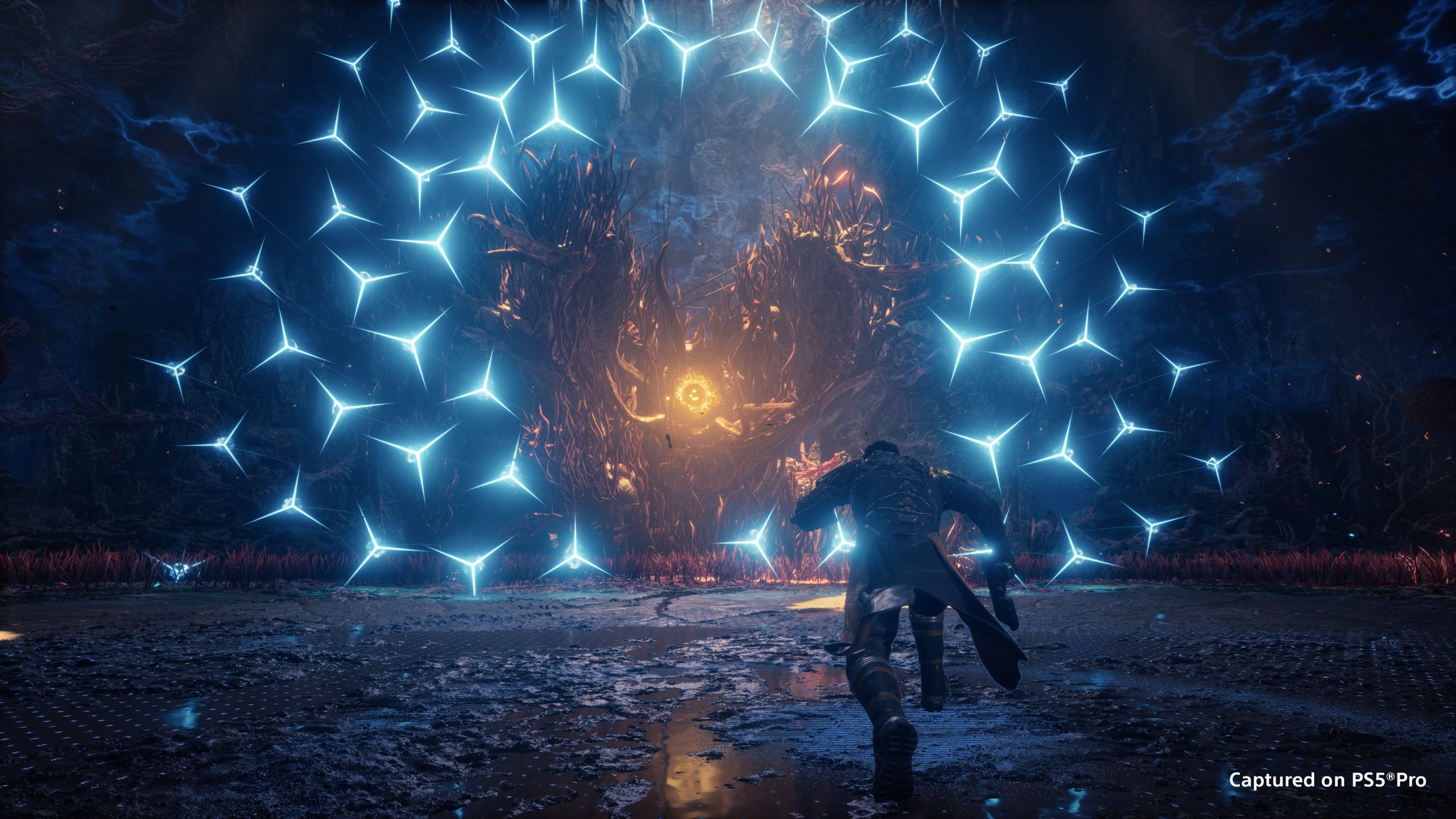
Hero image: Saros, captured on PS5 Pro. Image: PlayStation Blog
Saros has five set-piece bosses, and a PlayStation Blog post from 23 October explains how the two studios behind it split the work. It is bylined by Micah Hrehovcsik, game director at Nixxes, and Gregory Louden, creative director at Housemarque. The quotes below are the post’s own, and it carries a spoiler warning for the bosses, as does this piece.
Housemarque, the post says, brought the creative vision, the world and the combat language. Nixxes brought the bosses to life through encounter design, animation, environments, lighting and technical implementation. Housemarque handled boss concepts, visual direction and effects identity, with a final review of Nixxes’s work.
The process began with a briefing on the vision, gameplay goals and visual direction. Nixxes then pitched its own take, built early prototypes and first-playable versions, and refined each fight through iteration, playtesting and polish. The post says the fights are “fully staged encounters, not just enemies with larger health bars”, which is why the studios worked together from the start.
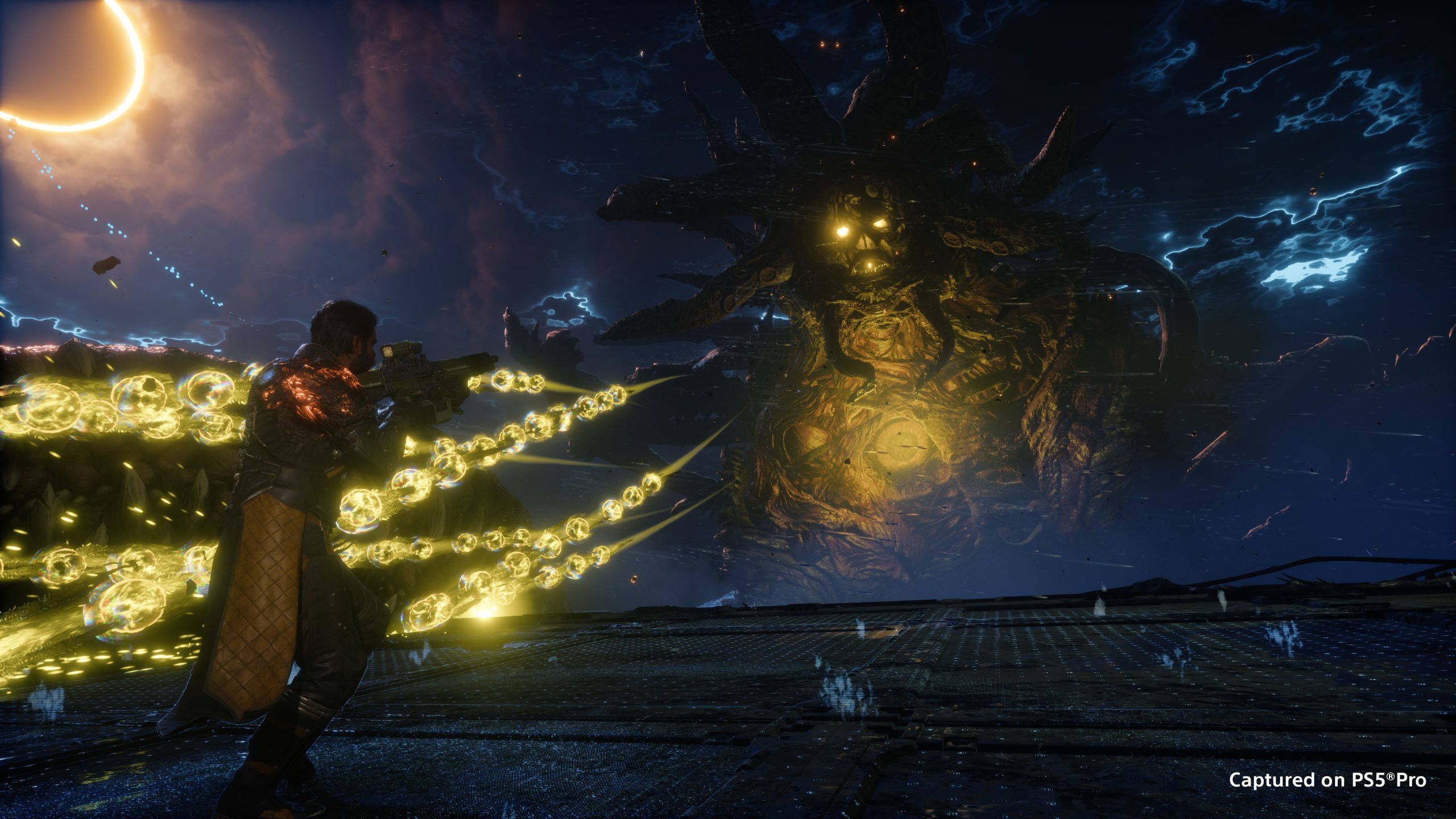
The post lists a few guiding principles — three distinct phases for every boss, a typical fight of about three to eight minutes, and difficulty that comes from boss behaviour, arena changes, hazards, bullets, beams and physical attacks. It says a good boss attack “should make players move with intent, not in panic”. When a player loses, one of the questions the team says it asked is “did it feel like their own mistake rather than something unfair”. The post says Saros: Zenith has a tighter arcade experience.
The post then goes through the five bosses, which it names as the Prophet, the Architect, the Shepherd, the Priestess and the King.
- Prophet. The early boss, built to teach what a Saros boss can be without becoming a progression blocker.
- Architect. A flying boss fought atop a tower. The post says the arena collapses, which makes the grapple hook fundamental: “You are not just fighting the boss; you are fighting to survive the arena.”
- Shepherd. The game’s largest boss, on a ship in a storm. Its tentacles shrink the arena and spawn attacks from unexpected directions.
- Priestess. A boss of illusion and transformation. The team wanted “players to feel the Priestess could be the final boss, even if the journey was not over yet”.
- King. The final boss, which the post says “starts controlled and relentless, then becomes more brutal, and finally something feral and unpredictable”.
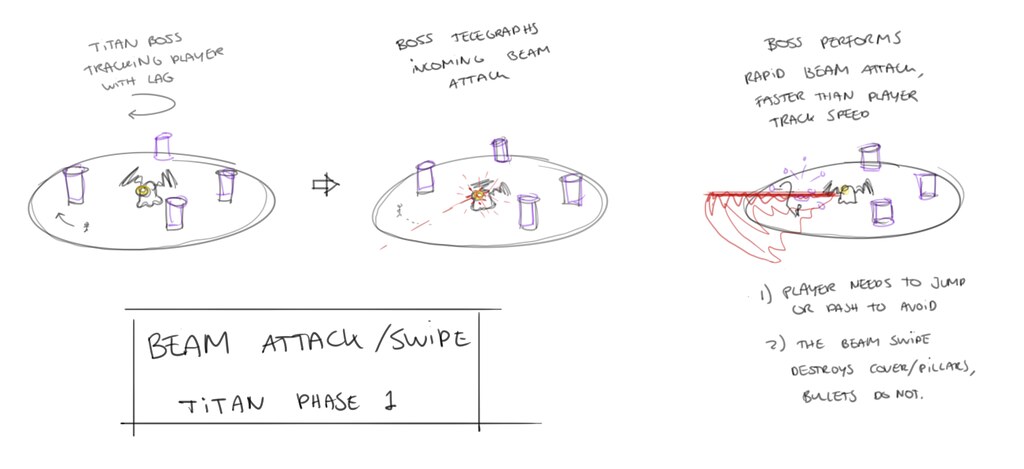
The post closes on Zenith, where players can return to these fights in Housemarque’s new Overlord Rush mode. The authors say they are excited to see players “fight to reach the top of the Leaderboard”.
It gives no price and no release date for the game or the update, and we did not read an Australian listing, so none is stated here. We have not played Saros, and this is a report on a developer post, not a review. The same blog’s piece on Lara Croft’s design is our feature from 23 October.
Source: PlayStation Blog – Saros: creating the epic Overlords of Carcosa