
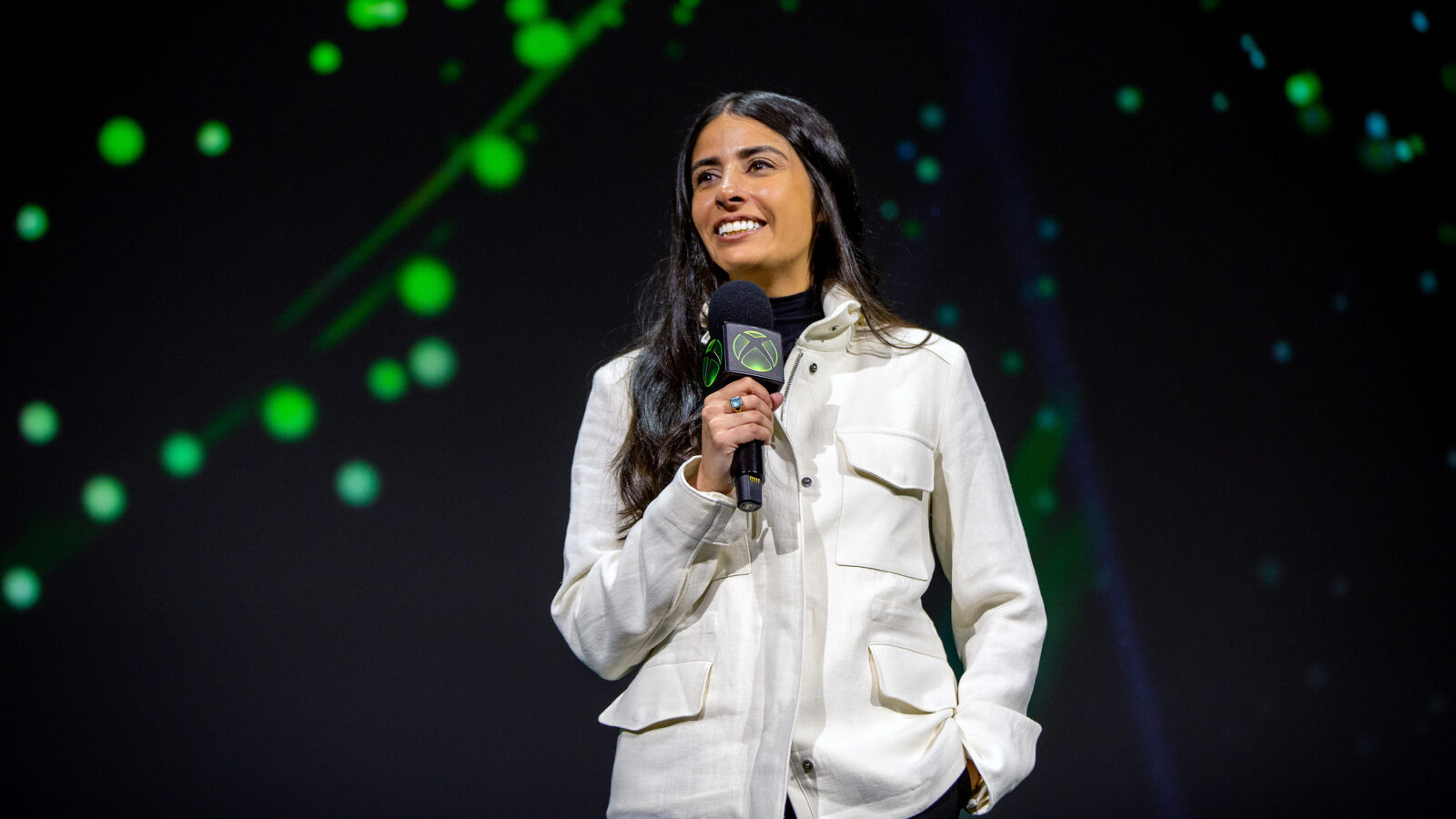
I’ll be honest with you: when Microsoft handed Xbox to an executive from its AI division, I rolled my eyes so hard I nearly needed a physio. Someone with no background in games, arriving from the part of the company building the technology everyone’s nervous about, taking over from Phil Spencer? I expected a year of buzzwords and slideshows. What I’ve got instead, seven months on, is a boss I keep having to give credit to. And I’m not entirely happy about that.
Asha Sharma took over in February, and almost immediately she promised that Xbox would not flood its ecosystem with “soulless AI slop”. Cheap words, I thought. Everyone says the right thing on day one. Then in May she did something I didn’t see coming. She killed Copilot on Xbox, stopping work on the console version and winding down the one in the mobile app. An AI executive switching off the AI. When was the last time you saw a company back away from something its own parent was pushing this hard?
Then there’s the change that actually touched your wallet. Last October, Game Pass Ultimate jumped from $22.95 to $35.95 a month here, and a lot of people walked. Sharma told staff the service had become too expensive, and in April our price came down to $25.95. A price going down. In games. I had to read it twice. There was a catch: new Call of Duty games no longer arrive on the service at launch, and turn up about a year later instead. I think that’s a trade worth making. But if Call of Duty was the only reason you subscribed, you lost the most.
In June came her first ever Xbox Games Showcase, and at FanFest in Los Angeles afterwards, she and Matt Booty told the room that everyone with a fan badge would be taking home a limited edition Xbox Series X25, the green console made for the brand’s twenty-fifth birthday. The crowd lost it. Yes, it was a room full of the loudest, most influential fans on the planet, and yes, that’s exactly why it was clever. But can you remember the last time a platform holder simply handed its most devoted players something, even one they won’t get until November?
What’s won me over more than any giveaway, though, is the way she talks. When people accused her of having AI write her posts, she replied that she doesn’t pretend to be the best gamer, and that yes, she writes her own posts. She reportedly runs Xbox on the idea that clarity is kindness, and fans have openly praised how much detail Xbox now gives when its servers go down. The Wall Street Journal even reports that she spends a few hours each month answering customer support tickets herself. Some people are calling that a PR line. Maybe it is. I’d still rather have a boss who does it for the story than one who never does it at all.
And here’s where I have to stop cheering, because you deserve the whole picture. In July, Sharma announced the biggest restructure in Xbox history: around three thousand two hundred jobs, roughly a fifth of the staff, half of them immediately and the rest over the coming year. Four studios are being spun out or sold, including Double Fine and Ninja Theory. Her explanation was blunt. Xbox, she said, had “simply spread ourselves too thin”. That bluntness is the same quality I’ve spent this whole column praising. It’s also cold comfort to the people who made the games we love, and I don’t think any of us get to talk about her wins without saying so.
So is Asha Sharma good for Xbox? Ask me in a year, once the hardware crisis has either eased or swallowed the next console whole. What I can tell you is that she’s done something I didn’t think any Xbox boss could do in 2026. She’s made me pay attention again. I came into this ready to write her off, and I’m leaving it slightly annoyed that I can’t. I suspect that says more about me than it does about her.